

Macuquinho Lodge

Updated: Dec 12, 2025
One of the most special things about working with birdwatching in Brazil is seeing, up close, how people’s passion can transform places.

Some of these projects start big, with investment, planning, and teams behind them. Others begin small — almost always with a dream, determination, and a long-standing relationship with the forest.
Sítio Macuquinho fits perfectly into this second group. And maybe that’s exactly why it feels so special.

Macuquinho Lodge is located in Salesópolis, within the Serra do Mar mountain range.
Today, it is a reference point for photographers and birders seeking high-quality photos of Atlantic Forest species, more discreet birds, and a calm, family-style, well-designed experience for those who want to stay close to nature.
But to understand what this place represents, it’s worth going back a few years and learning a bit about Elvis and Nanda — the owners, and the heart of a project that has inspired so many people in the birdwatching world.

How It All Began
Elvis is widely known as “Elvis Japão.” A local bird guide, he grew up exploring the region, understanding the marshes, patches of forest, calls, and habits of the very species people still seek there today.
Nanda — Fernanda de Fátima de Souza Brito — has always been by his side, in life and in the project, long before the lodge existed.

What many people don’t know is that his deep familiarity with the Serra do Mar began long before birdwatching.
Elvis comes from a family of hunters; he got his first shotgun at age 12 and spent much of his adolescence and early adulthood roaming the mountains almost all the way to the coast — sometimes spending up to 17 days straight in the forest, sleeping on makeshift beds built from wood and palm leaves, hunting Spot-winged Wood-Quail (Odontophorus capueira), Dusky-legged Guan (Penelope obscura), Paca (Cuniculus paca), Solitary Tinamou (Tinamus solitarius), and whatever appeared.
It was a different time, a different world. And that’s precisely why it’s so interesting to see how birdwatching ended up transforming his path, giving new meaning to everything he once learned purely through practice.
Elvis guiding
In addition to hunting, Elvis also worked for a year extracting wild palm hearts, carrying 60–70 kg loads on his back for long stretches — four, five, six kilometers into the forest — when he was just 17.
This familiarity with difficult terrain, trails, dense vegetation, and survival became, years later, an unexpected foundation for his work as a guide and lodge owner.
He later worked at a hydroelectric plant doing maintenance. Still at that job, he began assisting a biologist in fieldwork — setting up mist nets, handling birds, identifying species, collecting data.
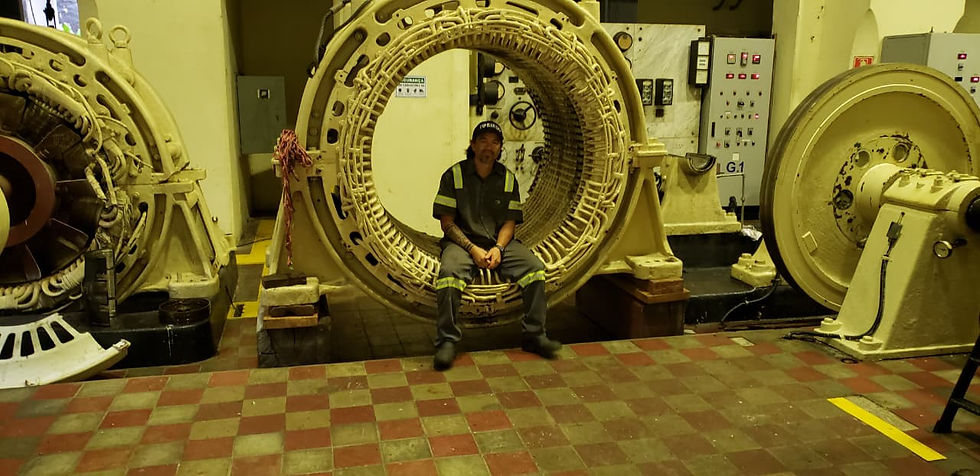
That was the turning point: a lifetime of practical knowledge from walking the Serra met, for the first time, the theory of biology and conservation. And it sparked a curiosity in him that never stopped growing.
The dream of the lodge took shape before 2018, when they finally purchased the property.
The idea, in theory, was simple: create a beautiful, comfortable, functional place to host birders and photographers, where visitors could rest, eat well, and see many birds without having to drive long distances.
In practice, of course, nothing about this was simple.
Elvis worked shifts at the hydroelectric plant and guided birders in his spare time. The guiding income helped support the family. Nanda worked at the same plant as a cleaner.
Like in many family-run nature-tourism projects, they had the will — but not the money.
Still, they knew exactly what they wanted to build.
From Inherited Home to the Right Piece of Land
Their first idea was to apply for a bank loan. The high interest rates made that impossible. The second was to look at what they already had: a small house Elvis had inherited from his grandmother, located inside a shared family lot.
It was the most valuable thing he owned, and the only realistic way to raise money was to sell it to a relative. And that’s what he did.
With the money they bought the land that is now Macuquinho Lodge seven years ago, in 2018, but only managed to move there on July 30, 2021 — a major milestone. Around that time, they left their jobs at the hydro plant, trusting that the project would work out.

Since then, they often say the lodge has many “angels”: people who helped at key moments and are still part of its story today.
These first steps opened the path to what mattered most: finding the right property. Several options appeared, but one stood out — not only for its location, but because Elvis already knew the area well.
Forest, marsh… everything in the right place to become a functional and welcoming birding site.
The previous owner made the purchase easier by offering interest-free installments. And from there, the part most people never see began: removing eucalyptus, restoring areas near springs, leveling ground, and deciding where each structure would go. Today, part of what used to be eucalyptus is a six to seven-year-old forest connected directly to the Serra do Mar.
Building With What They Had — and With Everyone Who Wanted to Help
Buying the land was only the beginning. They still had to build the lodge. To do that, Elvis and Nanda sold the car, the motorcycle, and anything else that could fund construction. The car became the roof. The motorcycle became paint. Everything else became whatever the project needed.
During the same period, Nanda stayed up late making “palha italiana" (a Brazilian chocolate-and-biscuit fudge bar) to sell.
Nanda and her famous Palha Italiana
She often worked until three in the morning cooking and packaging the sweets, which brought in around one thousand reais a month — exactly the amount needed to pay the bricklayer. That was their budget.
And even now that she no longer sells her products, long-time “palha italiana clients” — including Ciro — still ask: “Where’s Nanda’s palhas italianas?”
At the time, they both earned a minimum wage, with two daughters to raise. It wasn’t easy, but it was what kept the construction moving. Their daughters, at the time, thought their parents had completely lost their minds with this idea of building a lodge in the middle of nowhere.
Today, seeing what it became, they understand the importance of pursuing dreams.
And then something beautiful happened: friends and birding clients began asking how they could help.
That’s when the idea of a crowdfunding campaign came up — suggested by their friend Jefferson Bob, from Sítio Pau Preto. At first, Elvis was embarrassed. It felt like “asking for money.” But it was actually a way for people to take part in a dream that already felt collective.
Macuquinho Lodge under construction
They wrote down the name of every person who contributed, intending to discount the amount from future stays. Almost no one ever asked for the credit. Many friends and family members also helped with interest-free loans.
Three years of intense work during the pandemic resulted in their first big accomplishment: two finished suites, a functional kitchen, and the beginning of the gardens.
Today, Macuquinho has four guest suites and two additional rooms for guides. The structure has grown, but the essence is the same: familiar, simple in the best sense, efficient, and built with care.
Macuquinho suites
A Structure Designed for Birders
Elvis’s story as a guide truly began because of a single species: the Marsh [Sao Paulo] Antwren.
When birders started looking for it more frequently — a must-see species to “complete the album” — he realized that all of his knowledge of marsh habitat, calls, and behavior had value.
Guiding people for the antwren brought him fully into the birdwatching world. And once the species’ reputation solidified, more Atlantic Forest targets came, more visitors, and later the feeders… and that was the beginning of a much bigger project.
The property has seven hectares, inserted in Serra do Mar. The trails total almost two kilometers — clean, well maintained, and with strategic observation points. There are two hides designed for shy species, with controlled feeding.
Another hide, in the marsh, attracts Red-and-white Crakes (Laterallus leucopyrrhus). There are fruit feeders, seed feeders, a reflection pool, a bird bath, and even a small perch-shower for hummingbirds.

The garden is both beautiful and functional, with ponds that always bring surprises.
Macuquinho's garden
Macuquinho also maintains a light trap for moths — something photographers love.
It’s a place that honors its purpose: welcoming, calm, and full of details designed for people who like to observe nature without rushing.

Check out the eBird hotspot for Macuquinho Lodge: Click here
Plans for the Future
When Andy and Gill Swash — dear friends and clients for nearly two decades — visited just recently after a few years away, their reaction was immediate: “How can so much change so quickly?”
Andy knew the lodge when it was practically just land and a dream Elvis talked about. Seeing such a tangible transformation in five or six years impresses even those who know the story well.
The next goal is to add two or three more rooms, enough to host groups traveling in vans. But always keeping the number of people limited so the environment stays calm — for guests and for the birds.
It’s a family-run lodge, and everything works as a team: Elvis handles maintenance and guiding, Nanda manages logistics and bookings, their daughters help with daily tasks, marketing, and a staff member assists with cooking and cleaning. Simple, straightforward, and efficient.

Our Relationship With Macuquinho
BBE’s relationship with Macuquinho began before the lodge existed. Before we were even an agency, we were already friends. Tati, Ciro, I, and several other guides used to work with Elvis in the Salesópolis area, and he was always one of the people who knew the region best.

When Macuquinho was born, our connection naturally grew stronger. We have brought groups there from the very beginning, and it’s always a pleasure to see how the place evolves — while the way they host remains as genuine and thoughtful as ever.

For us, Macuquinho is more than a partner: it’s part of our story in southeastern Brazil.
And when we look back at everything Elvis and Nanda lived — from hunting in the mountains, to carrying 70-kg loads of palm heart, to staying up late making sweets to pay the bricklayer — and then look at what Macuquinho is today… it’s clear this place didn’t arise by chance. It was built with history, work, perseverance, and transformation.
What BBE Guests Find There
Guests arriving with our guides often highlight something essential: attention to detail. Elvis always checks if the path is safe, if the terrain is calm, if there are insects, or if the trail requires anything extra.

He explains beforehand, guides when necessary, and follows up afterward to make sure everything met expectations. He and Nanda are always asking for feedback, looking for ways to improve. This combination of care, technique, and well-being creates an experience that goes far beyond simply “showing birds.”
Macuquinho's outdoor kitchen
And maybe that’s why so many people return.
A Thank-You
Macuquinho is one of those places that show, in practice, what nature-based tourism looks like when it’s done with purpose: conservation, hospitality, and hard work. What Elvis and Nanda built is not just a lodge — it’s a living environment.
We at BBE are grateful — for their work, their partnership, and their trust. And for making this corner of southeastern Brazil an even more special place to watch birds.
1- Sayaca Tanager 2 - Brassy-breasted Tanager 3 - Ruby-crowned Tanager 4 - Burnished-buff Tanager
Ready to experience the birds and landscapes that inspired Sítio Macuquinho’s journey?
Explore our Southeast Brazil Birding Tours and discover the region’s unique species, culture, and history firsthand.


Comments